Skincare Science · The Ingredient Files
The Retinol Trap: Why Anti-Aging Routines Fail in Week Three (And the Plant Molecule Quietly Replacing It)
Ask around: almost everyone who has tried retinol has also quit retinol, usually somewhere in the red, flaking middle of week three. The failure is built into how the molecule works. There is another way in.
By The Skin Edit Editors
The desk that reads ingredient lists for a living
February 28, 2026 · 6 min read
I gave up on retinol three times before I admitted the problem was not me.
The first attempt was prescription tretinoin. Two weeks of redness, then a layer of skin peeled off my chin in the shower. I quit. The second was a gentler over-the-counter version at 0.25%, on a colleague's glowing recommendation. Three months of low-grade purging that never finished purging. I quit again. The third time I tried “sandwiching,” buffering the retinol between two layers of moisturiser. Different technique, different brand, same quit.
Here is the part nobody prints on the bottle: my story is the normal one. Dermatologists will tell you plainly that a large share of the people they start on retinoids stop within the first several weeks. Not because the molecule fails. Because the entry fee (the redness, the shedding, the sun sensitivity, the “worse before better” arc) is more than most adult faces, jobs, and mirrors are willing to pay.
And the thought that sent me down the rabbit hole that became this article: softer-looking lines never actually required the peeling in the first place.
The trap: a turnover engine your skin did not ask for.
Retinoids work by converting inside your skin cells into retinoic acid, which binds to nuclear receptors and accelerates the rate at which your surface skin cells reproduce and shed. The cosmetic logic is elegant: force faster turnover, surface newer cells, and over months you get smoother texture and softer-looking lines. It is real, and there are decades of dermatology behind it.
The catch is what happens during the acceleration. While turnover ramps up, every microscopic clog in your pores gets pushed to the surface at roughly the same time, and your barrier (the lipid layer that holds water in and irritants out) is temporarily rebuilt faster than it can mature. So for the first four to twelve weeks, your skin does the opposite of what you wanted. It reddens. It flakes. It stings when your moisturiser touches it.
The marketing word for this is purging. The biological translation is: your barrier is compromised, please be patient. Most people, reasonably, are not.
The pivot: a plant signal that skips the purge entirely.
The molecule that pulled me back into the category is Bidens Pilosa, a flowering plant in the daisy family that has become the most-studied botanical retinol alternative in cosmetic chemistry. In lab studies its extract activates the same retinoid receptor pathways retinol does, but it is not a retinoid. It does not force cell turnover. Which means no shedding phase, no barrier compromise, and no purge to survive.
In plain English: it knocks on the same cellular door retinol kicks down.
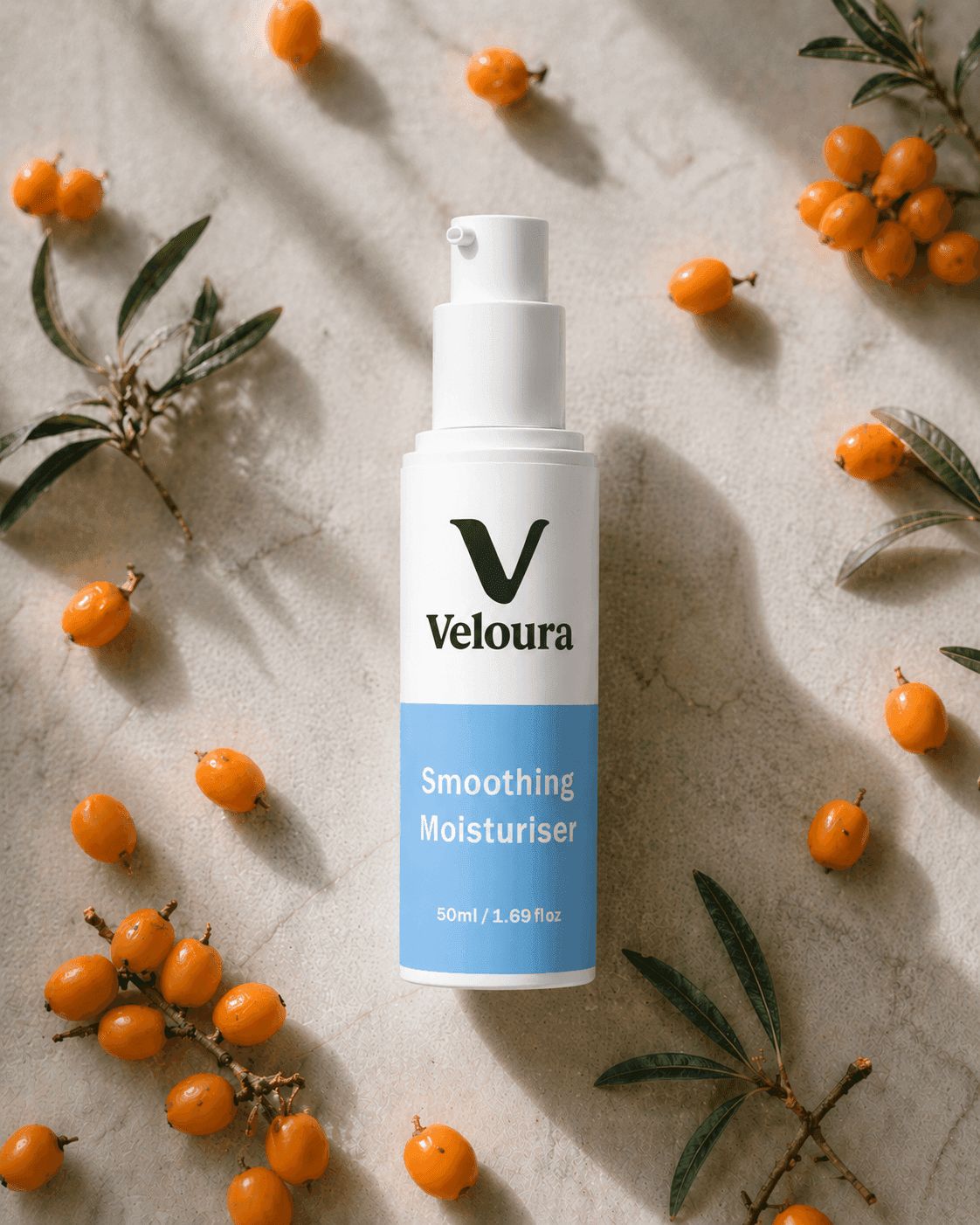
The catch with most Bidens Pilosa products is dosage. The extract shows up on ingredient lists at trace levels so the name can sit on the label, well below the 1 to 2% range the cosmetic chemistry literature treats as functional. That is why the formula this article kept circling back to is Veloura's Smoothing Moisturiser, which prints its inclusion rate on the front of the jar: 2% Bidens Pilosa. Dosed for effect, not for the label.
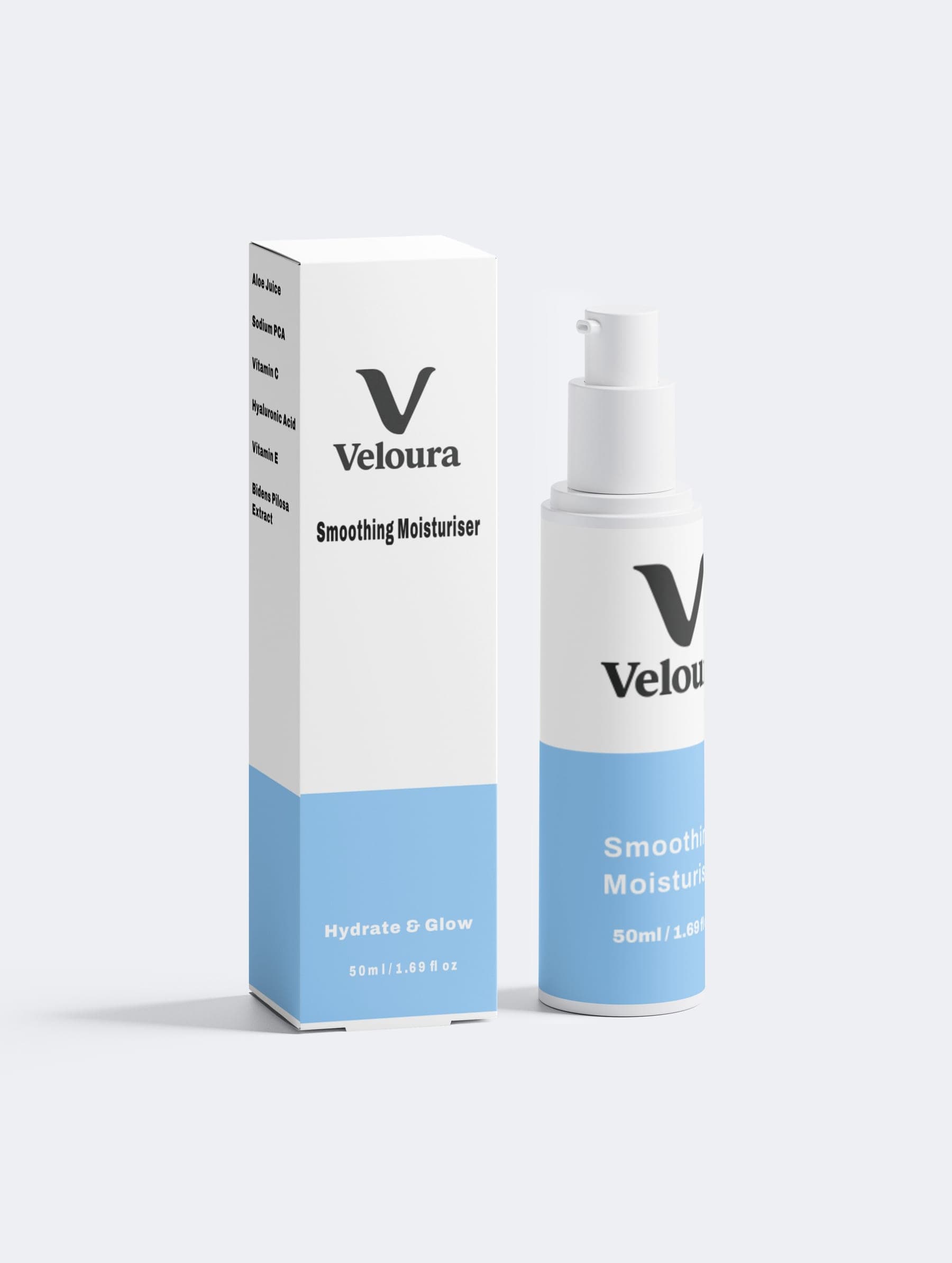
What kept me reading past the headline active was the supporting cast. Dipalmitoyl Hydroxyproline works on the collagen scaffold beneath the line itself. Dual-weight Hyaluronic Acid hydrates at two skin depths. Sea Buckthorn extract and Mango Seed Butter carry the comfort layer, and a Vitamin C plus Vitamin E pair defends the new structural work from the same oxidative stress that wears down the old. Nothing exotic. All of it published on the ingredient list, end to end.
Why it works · the receipts
No. 01
It signals instead of exfoliating.
Because the active is a plant-derived signal rather than an exfoliating retinoid, the barrier is never compromised. Day one of use looks like day forty. The difference is that by day forty, texture reads visibly smoother.
No. 02
Two percent is the functional dose.
The cosmetic chemistry work on Bidens Pilosa converges on the 1 to 2% range for visible softening. Most retinol alternatives include a fraction of that. This formula prints 2% on the front of the jar and lets you hold it to the number.
No. 03
What is deliberately not in it.
No retinoids, no exfoliating acid concentrations, no synthetic fragrance, no drying alcohols. Built to European standards, which prohibit roughly 1,600 ingredients that remain legal elsewhere. The full ingredient list is published in plain categories you can read in a minute.
No. 04
A second ingredient works the scaffold.
Dipalmitoyl Hydroxyproline supports the collagen structure beneath the wrinkle rather than the surface above it. Paired with the Bidens Pilosa signal, one moisturiser addresses two layers of the same problem, twice a day.
The honest timeline, because there is one.
Plant signalling is not faster than prescription retinoids, and this article will not pretend otherwise. Collagen takes time no matter how you ask for it. The realistic arc is smoother-feeling texture inside two weeks, softer-looking lines somewhere between weeks two and four, and the more meaningful firmness change over two to three months of twice-daily use.
What changes is the floor. With retinol, the floor is “first, survive the purge.” Here the floor is “be consistent.” If you have already been through the try-quit-try loop, you know which of those two you will actually do. And if the jar proves you wrong, Veloura's 30-day money-back guarantee means the experiment costs you nothing.
This is the moisturiser I would hand a friend who told me, slightly embarrassed, that they had quit retinol again.
For Skin Edit readers
If this piece read like your skin's story, here is the next step.
No countdown clock and no invented stock shortage. Veloura extends its standing first-order discount to Skin Edit readers, and the code applies automatically when you tap through. Take the 30 days and let your mirror decide.
The formula
Smoothing Moisturiser
The retinol alternative: 2% Bidens Pilosa, zero purge
- 10% off your first order with code WELCOME10, applied for you when you tap through
- Free tracked shipping on orders of $70 or more
- 30-day money-back guarantee: use it morning and night, and if your skin does not look smoother, every cent comes back
Code applied for you · 30-day money-back guarantee