Skincare Science · The Ingredient Files
The Plumping Mirage: Why Skin Bounces at 8 A.M. and Crashes by 3 P.M. (And the Peptide Most Serums Won't Dose Properly)
Hyaluronic acid pulls water to the surface. It does not instruct your skin to rebuild anything, which is why the morning bounce is gone by mid-afternoon. The fix is a signal, and the difference between a signal and a label is the dose.
By The Skin Edit Editors
The desk that reads ingredient lists for a living
March 14, 2026 · 6 min read
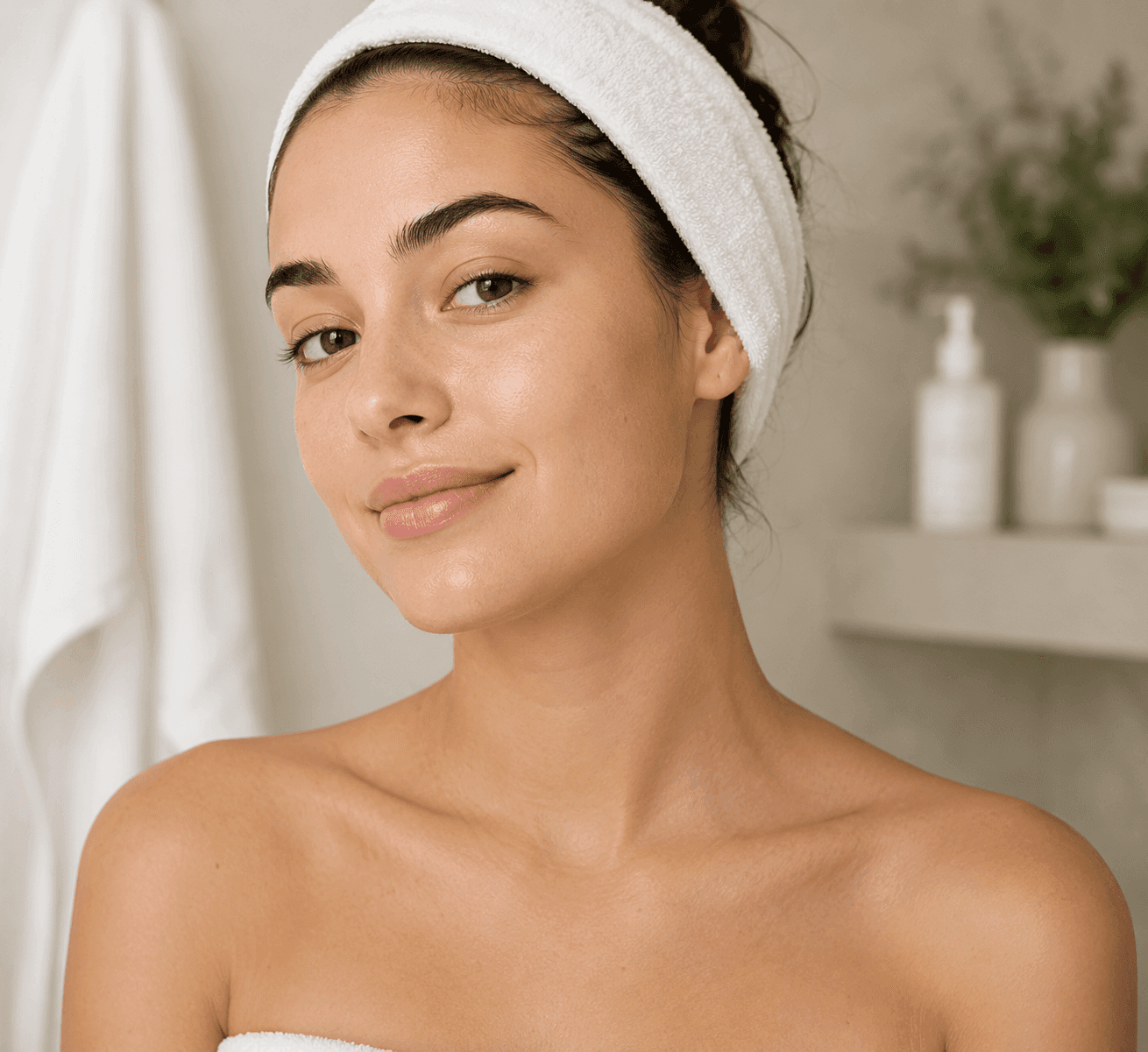
I spent four years convinced hyaluronic acid was the answer to losing my mid-twenties bounce.
And every morning, for a few hours, it was. Serum on, skin visibly plumper, fine lines softened, the bathroom mirror generous. By mid-afternoon the effect had quietly evaporated, and by evening my face looked exactly as tired as it had before I started. I bought stronger percentages. I layered. The morning got better. The 3 p.m. crash stayed.
The explanation, once a cosmetic chemist walked me through it, was almost insultingly simple. Hyaluronic acid is a humectant. It pulls water into the upper layers of skin and holds it there, and swollen skin temporarily reads as firm skin. But water is not structure. Nothing was being built. I was renting my bounce by the hour.
Real, lasting firmness has exactly one source: the collagen and elastin your fibroblasts manufacture. And fibroblasts do not retire with age. They idle. What fades is the biochemical signalling that used to tell them build, repair, replace. Aging skin is less a hardware problem than a communications problem.
Peptides are the memo. Most serums never send it.
Peptides are short chains of amino acids, fragments of the same proteins skin is built from, and certain sequences function as instructions. Fibroblasts read them the way a factory reads a purchase order. Hexapeptide-11 is one of the best-documented of those sequences: in lab studies it nudges fibroblast activity and the production of the structural proteins that keep skin dense and springy.
So why did the peptide serum you already tried do nothing? Almost always: dose. Peptides are among the most expensive raw materials in cosmetics, so the market norm is a token amount, enough to justify the word on the label and orders of magnitude below what the research uses. The label says peptides. The bottle mostly says water.
The formula that prints its dose on the front.
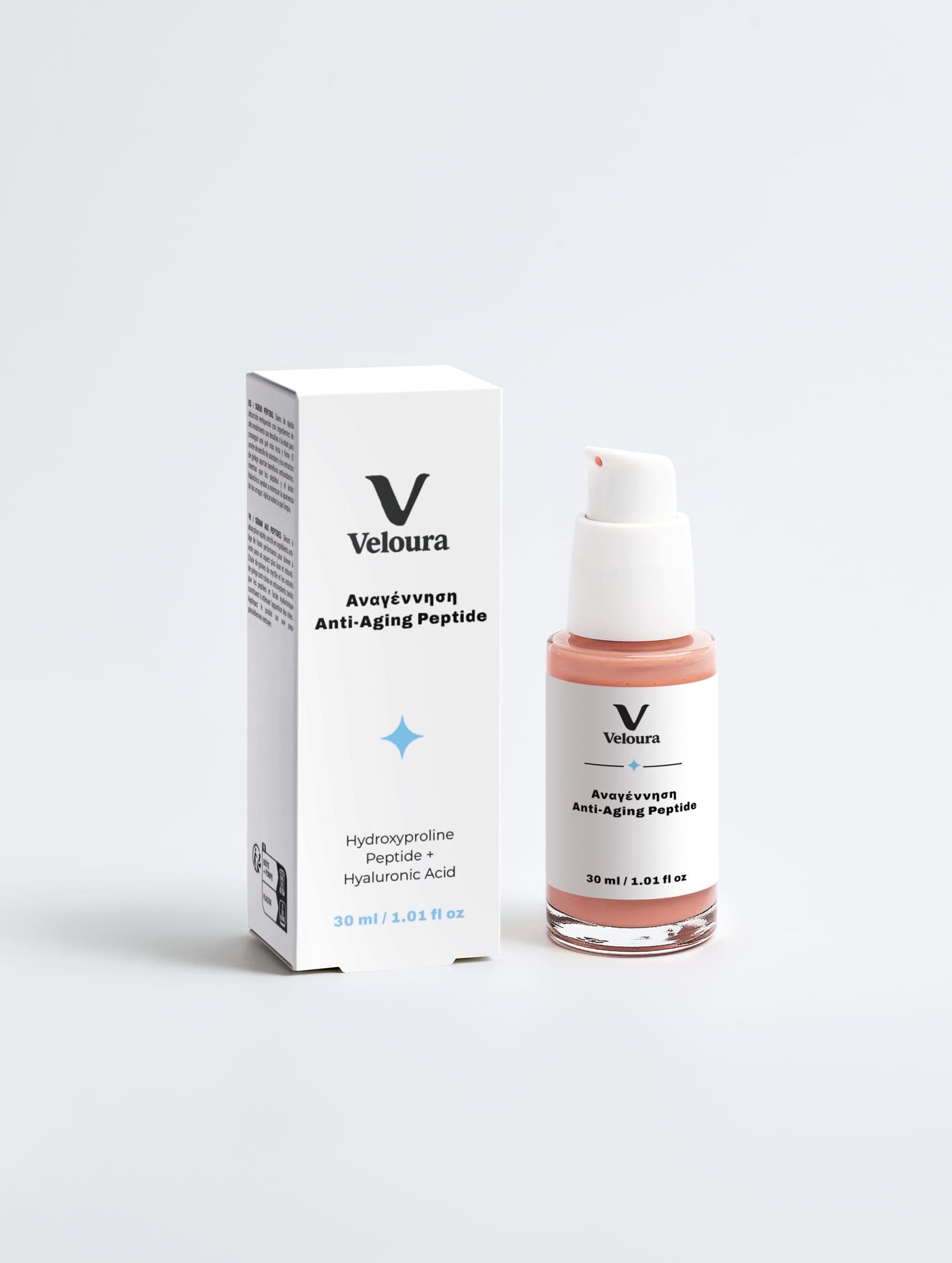
This is why Veloura's Peptide Serum kept coming up while we reported this piece. It carries a clinical 2% concentration of Hexapeptide-11 and prints that number on the front of the bottle, where a dosage claim can be held to account. Alongside it, a second structural peptide, Dipalmitoyl Hydroxyproline, reinforces the collagen scaffold you already have, so the serum maintains while it signals for more.
And yes, there is hyaluronic acid in it too, in dual weights that hydrate at the surface and deeper down. Water is a fine renter while the builders work. The point is that here, the plumping is the opening act rather than the whole show. Ginkgo Biloba and Blueberry Seed Oil round out the formula as antioxidant cover for the new collagen being laid down.
Why it works · the receipts
No. 01
Two percent, printed where you can check it.
Most peptide products keep their concentration a secret because the number is embarrassing. This formula puts 2% Hexapeptide-11 on the front panel. Dose transparency is the fastest way to sort serious formulas from label-dusters.
No. 02
Two peptides, two different jobs.
Hexapeptide-11 signals for new collagen. Dipalmitoyl Hydroxyproline reinforces the scaffold already in place. Building and maintaining are separate jobs, and the formula staffs both.
No. 03
Hydration buys time for structure.
Dual-weight Hyaluronic Acid plumps at two depths from day one, which keeps the mirror encouraging while the slower fibroblast work compounds underneath. The rented bounce and the owned bounce, in one bottle.
No. 04
Antioxidants protect the investment.
New collagen degrades under the same oxidative stress that broke down the old. Ginkgo Biloba and Blueberry Seed Oil are in the formula so it is not filling a leaking bucket.
The honest timeline.
Signalling takes time, and no honest peptide product pretends otherwise. The hydration effects arrive first: plumper, better-lit skin inside the first week or two, and this time it holds past lunch. The structural change runs on collagen's schedule: fine lines look less defined somewhere in the two-to-four-week range of twice-daily use, with firmness compounding from there.
If you have a drawer of retired serums that promised and did not deliver, the diagnosis was probably never peptides. It was dose. This is the bottle we would hand you to test that theory, and the 30-day money-back guarantee makes the test free to fail.
For Skin Edit readers
If this piece read like your skin's story, here is the next step.
No countdown clock and no invented stock shortage. Veloura extends its standing first-order discount to Skin Edit readers, and the code applies automatically when you tap through. Take the 30 days and let your mirror decide.
The formula
Peptide Serum
A clinical 2% Hexapeptide-11, printed on the bottle
- 10% off your first order with code WELCOME10, applied for you when you tap through
- Free tracked shipping on orders of $70 or more
- 30-day money-back guarantee: if fine lines do not look softer, every cent comes back
Code applied for you · 30-day money-back guarantee