Skincare Science · The Ingredient Files
The Hydroquinone Hangover: Why Dark Spots Come Back Darker (And the Bearberry Derivative That Hits the Same Target Gently)
Hydroquinone is banned in EU cosmetics and restricted in the US, yet the enzyme it targets is exactly the right target. A plant-derived molecule now reaches it without the toxicity profile or the rebound.
By The Skin Edit Editors
The desk that reads ingredient lists for a living
January 22, 2026 · 6 min read
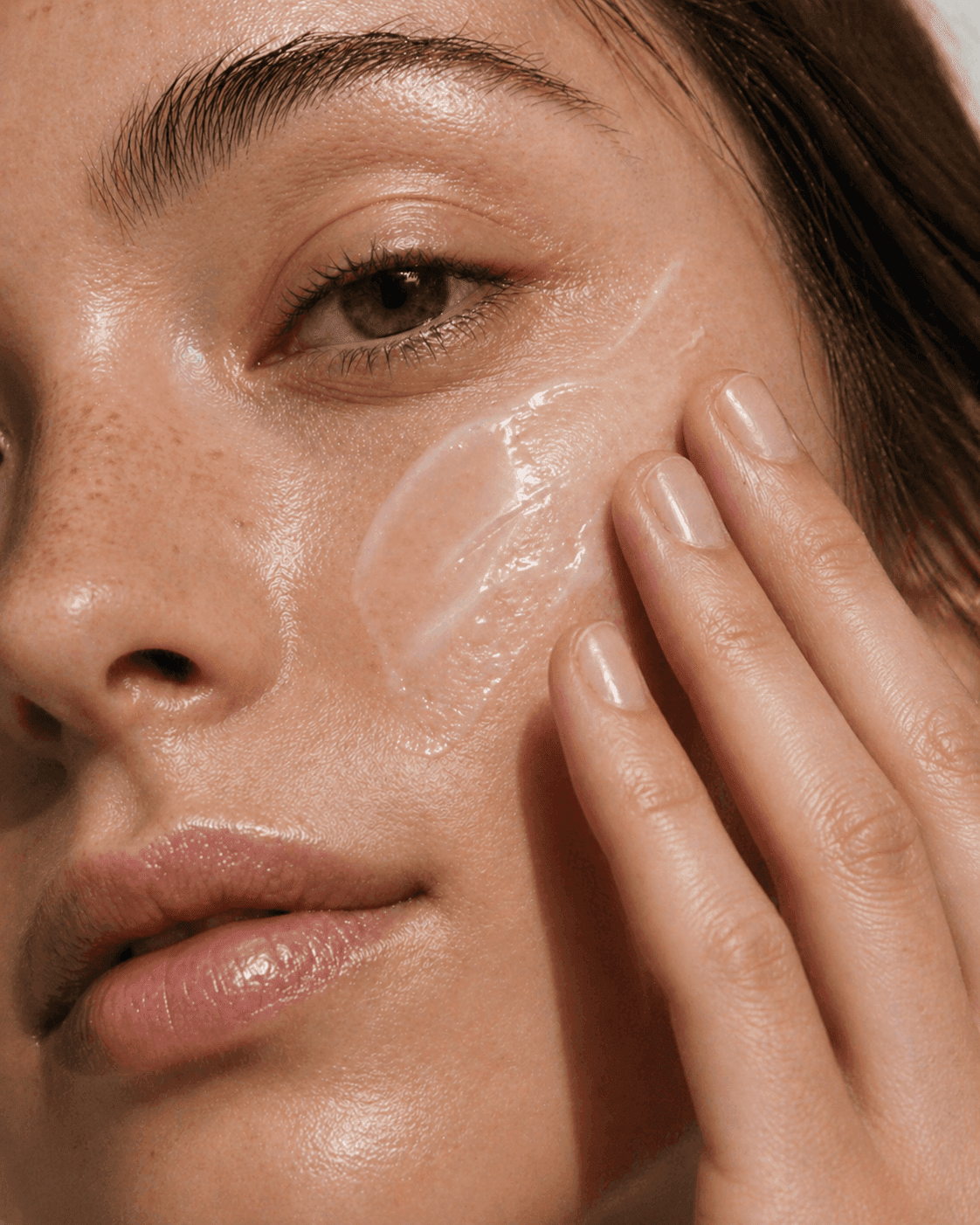
By the time my dark spots came back darker than before I treated them, I had been using hydroquinone for nine months.
A dermatologist prescribed it for a post-inflammatory mark on my right cheek, the souvenir of one bad cystic breakout. And it worked, at first, exactly as advertised. By month two the spot had faded. By month four it was nearly invisible.
Then the prescription ended, the cream stopped, and within six weeks the spot was back: larger, more diffuse, and stubborn enough that two follow-up rounds never fully cleared it. Dermatology has a name for this pattern, rebound hyperpigmentation, and it is common enough that the EU banned hydroquinone from cosmetics back in 2001, with the US tightening its own restrictions since.
Here is the frustrating part: hydroquinone works. The biological target it aims at is precisely the right one. The problem was never the target. It is the molecule chosen to hit it.
The hangover: suppression is not resolution.
Dark spots are melanin, and melanin production runs through one bottleneck enzyme: tyrosinase. Hydroquinone inhibits it bluntly, and short-term, that genuinely fades spots. But the molecule is harsh enough that long-term, high-strength use carries documented risks, including a paradoxical darkening called exogenous ochronosis. And the suppression is temporary by design: stop the cream and the melanocytes resume production, often more aggressively, because the original trigger (sun, hormones, the scar of a breakout) never went anywhere.
That is the hangover. You bleach, you stop, the spot returns with interest, and each round leaves the skin a little less cooperative than the last.
The fix: the same lock, a gentler key.
Alpha-Arbutin is a glycosylated derivative of hydroquinone drawn from bearberry leaves: chemically, hydroquinone wearing a sugar molecule as a chaperone. It binds to and inhibits the same tyrosinase enzyme, but gradually and without the cytotoxicity, which is why it remains fully legal in the same European markets that banned its parent. Fading happens by turning the production dial down, not by bleaching what is already there.
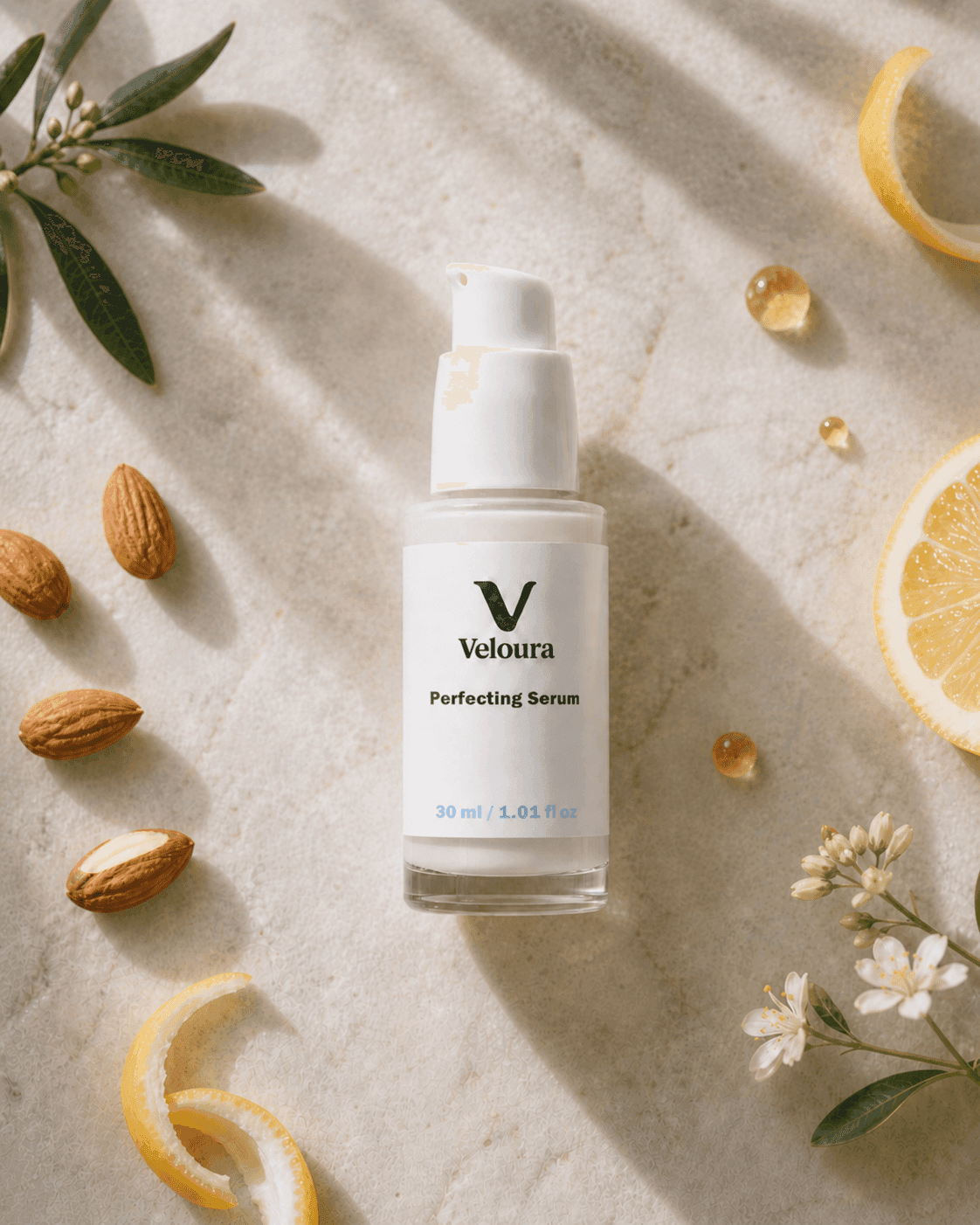
Veloura's Perfecting Serum is built around exactly this active, paired with Vitamin E and Ascorbyl Palmitate, a stable Vitamin C form, as antioxidant support against the oxidative stress that helps trigger pigment in the first place. Dual-weight Hyaluronic Acid keeps the treated skin hydrated and comfortable, because a barrier under stress makes more pigment, not less.
Why it works · the receipts
No. 01
Same target, safer chemistry.
Alpha-Arbutin inhibits the identical tyrosinase bottleneck hydroquinone does, with the sugar group slowing its release enough to avoid the toxicity profile. It stays legal in the EU precisely because of that difference.
No. 02
Dialing down beats bleaching out.
Reducing melanin production lets existing spots fade on the skin's own turnover schedule. Nothing is being stripped, so there is no suppression cliff waiting when you eventually stop.
No. 03
Antioxidants work the trigger side.
Oxidative stress is one of the standing triggers for excess pigment. Vitamin E and stable Vitamin C in the same formula mean the serum works the cause while the arbutin works the symptom.
No. 04
Comfortable skin pigments less.
Inflammation is pigment's favourite excuse. Dual-weight Hyaluronic Acid keeps the treated area hydrated and calm, which matters more for tone than most routines account for.
The honest timeline, and one non-negotiable.
Working through the production pathway is slower than bleach, and that slowness is the feature. Expect brighter, more even overall tone in the first few weeks, and visible fading of individual spots over six to twelve weeks of daily use as the skin turns over. And wear sunscreen: no tone product on earth can outrun unprotected sun exposure, and pretending otherwise is how this category earned its reputation.
If you have done the hydroquinone loop, or watched a spot creep back after every treatment that promised otherwise, this is the patient route. Thirty days in, your tone should already read more even. If it does not, the guarantee means it cost you nothing to find out.
For Skin Edit readers
If this piece read like your skin's story, here is the next step.
No countdown clock and no invented stock shortage. Veloura extends its standing first-order discount to Skin Edit readers, and the code applies automatically when you tap through. Take the 30 days and let your mirror decide.
The formula
Perfecting Serum
Alpha-Arbutin tone correction, without the rebound
- 10% off your first order with code WELCOME10, applied for you when you tap through
- Free tracked shipping on orders of $70 or more
- 30-day money-back guarantee: if your tone does not look more even, every cent comes back
Code applied for you · 30-day money-back guarantee